
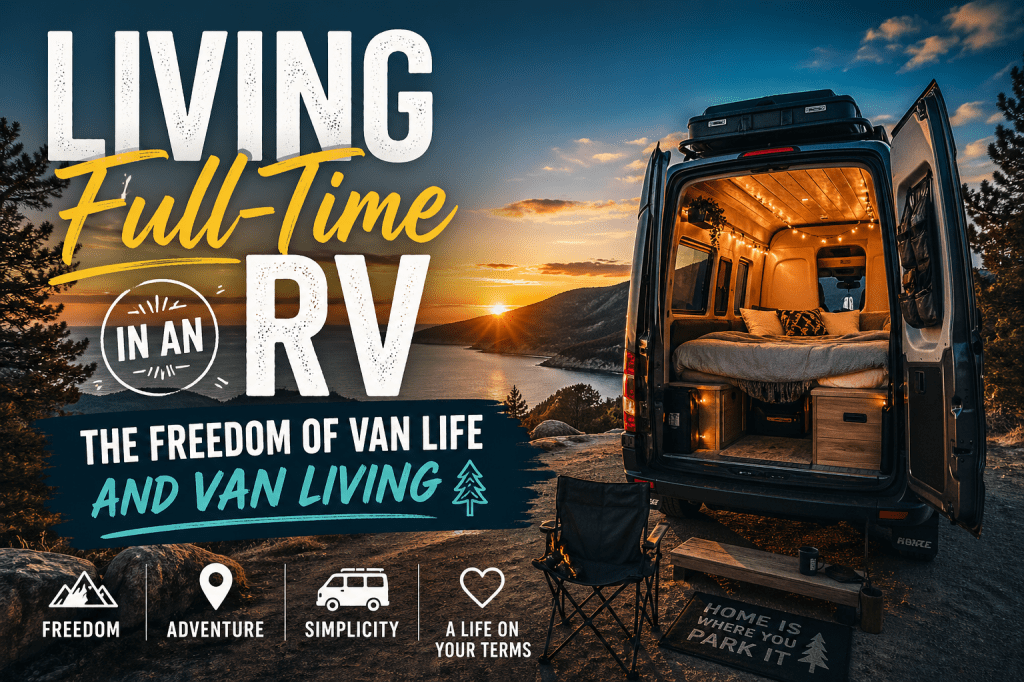
There’s a growing movement of people trading traditional homes for life on the road—and it’s not just a trend, it’s a lifestyle shift. Full-time RV living and van life offer freedom, flexibility, and a chance to design life on your own terms. Whether you’re drawn to minimalist living, travel, or financial independence, van living opens doors that a stationary life often can’t.
What Is Full-Time RV Living?
Full-time RV living means your home is on wheels. Instead of paying a mortgage or rent, your “house” could be a motorhome, travel trailer, or camper van. Many people transition into van life to cut expenses, explore the country, or escape the 9-to-5 routine.
Unlike weekend camping, full-time RV living requires planning, adaptability, and a willingness to embrace a simpler lifestyle.
Why Van Life Is So Popular
Van life has exploded in popularity over the past decade, and for good reason:
- Freedom to travel: Wake up in the mountains one week and by the ocean the next
- Lower cost of living: No property taxes, smaller utility bills
- Minimalism: Focus on experiences instead of possessions
- Remote work friendly: Perfect for digital nomads
For many, van living isn’t about sacrifice—it’s about gaining control over time and money.
The Reality of Van Living
While Instagram might make van life look glamorous, the reality is a mix of highs and challenges.
The Pros:
- Flexibility to move whenever you want
- Lower monthly expenses (if managed well)
- Closer connection to nature
- A strong sense of independence
The Cons:
- Limited space and storage
- Finding reliable internet for work
- Managing water, power, and waste
- Weather challenges (heat, cold, storms)
Living full-time in an RV or van means becoming more self-reliant and adaptable.
How Much Does Full-Time RV Living Cost?
Van life can be cheap—but it depends on your lifestyle. Here’s a rough breakdown:
- Fuel: $200–$800/month depending on travel
- Campgrounds/RV parks: $0 (boondocking) to $1,000+/month
- Food: Similar to traditional living
- Maintenance & repairs: Variable but important to budget
Many full-time RVers live comfortably on $1,500–$3,000 per month, though it can be higher or lower depending on choices.
Choosing the Right Setup
Your setup will shape your entire van living experience.
Popular Options:
- Camper Vans – Best for mobility and stealth camping
- Class B RVs – Built-in comfort with van size
- Travel Trailers – More space but less mobility
- Class A Motorhomes – Maximum comfort, higher cost
If your goal is true van life, a converted cargo van offers the best balance of flexibility and affordability.
Essential Tips for Van Life Success
If you’re considering full-time RV living, keep these in mind:
- Downsize aggressively – You don’t need as much as you think
- Plan your power setup – Solar is a game-changer
- Stay organized – Small spaces require discipline
- Have an emergency fund – Repairs happen
- Test it first – Try a few weeks before committing full-time
Is Van Living Right for You?
Van life isn’t for everyone—but for the right person, it can be life-changing. If you value freedom over stability, experiences over things, and mobility over routine, full-time RV living might be exactly what you’re looking for.
It’s not about escaping life—it’s about building a different one.

- The Grid Goes Down: What Happens in the First 24 Hours (and What to Do About It)
- Starlink Mini Review: The Best Internet for Van Life, RV Travel & Off-Grid Living (2026)
- The Minimalist Van Life Oral Care Routine That Changed Everything
- Living Full-Time in an RV: The Freedom of Van Life and Van Living
- How to Shower in a Van: 3 Simple Methods That Actually Work





Leave a Reply